 USA
Country
USA
Country
Watch the trailer before exploring full movie details
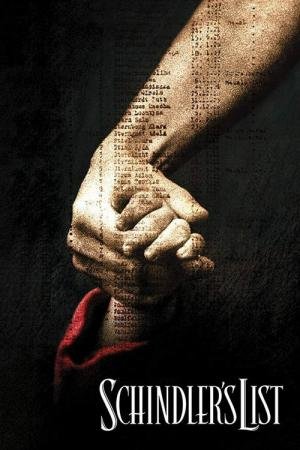
Schindler's List - Movie Crew Info
Schindler’s List tells the powerful true story of Oskar Schindler, a German businessman who becomes an unlikely hero during one of history’s darkest times: the Holocaust. At the start of the film, Schindler is a charming and opportunistic man who arrives in Kraków, Poland, just as World War II is beginning. He’s eager to make money by taking advantage of the new Nazi regime. Using his connections, Schindler acquires a factory to produce enamelware for the German army, employing Jewish workers because they are cheaper than Polish laborers.
As the story unfolds, Schindler witnesses the brutal treatment of Jews by the Nazis. The film shows the heartbreaking scenes of families being torn apart, people forced into crowded ghettos, and random acts of violence and cruelty by soldiers. Among the workers in Schindler’s factory is Itzhak Stern, a Jewish accountant who helps Schindler manage the business. Stern becomes a crucial partner in Schindler’s growing efforts to protect his workers from the horrors outside the factory walls.
Over time, Schindler’s motivations change. What starts as a business venture driven by profit turns into a mission to save as many lives as possible. Using his wealth and influence, Schindler bribes Nazi officials and manipulates the system to keep his Jewish workers safe from deportation to concentration camps. He compiles a list of over 1,000 men and women, now known as “Schindler’s List,†who are transferred to a safer factory he sets up away from the front lines.
The film doesn’t shy away from showing the horrors of the Holocaust, including the harrowing scenes inside the concentration camps and the suffering endured by millions. But through Schindler’s actions, there is a message of hope and courage. The workers on the list owe their lives to him, and their gratitude is deeply moving. Schindler himself struggles with guilt and the limits of what he can do, especially as the war nears its end.
One of the most emotional moments comes near the film’s conclusion, when Schindler is forced to flee as the Nazis lose power. His workers present him with a ring engraved with a Talmudic quote: “Whoever saves one life saves the world entire.†Schindler breaks down, realizing he could have saved even more if he had sacrificed more of his wealth. The film closes with a powerful tribute to the real survivors who owe their lives to Schindler’s bravery and determination.
Schindler’s List is a deeply moving film about humanity, sacrifice, and the ability to do good in the face of overwhelming evil. It reminds us of the tragic consequences of hatred but also celebrates the strength of compassion and the difference one person can make.
Schindler's List teaches the profound impact one person can have amid unimaginable darkness. It reveals the depths of human cruelty during the Holocaust, yet also the power of compassion and courage. The film urges us to remember history's horrors to prevent their repetition. Through Oskar Schindler's transformation, it shows that even flawed individuals can choose good, saving lives against all odds. Ultimately, it is a poignant call for empathy, hope, and the enduring strength of humanity in the face of evil.
Awards
Academy Awards (1994)
Best Picture
Best Director – Steven Spielberg
Best Adapted Screenplay – Steven Zaillian
Best Cinematography – Janusz Kamiński
Best Art Direction-Set Decoration
Best Film Editing
Best Original Score – John Williams
Golden Globe Awards (1994)
Best Motion Picture – Drama
Best Director – Steven Spielberg
BAFTA Awards (1994)
Best Film
Best Direction – Steven Spielberg
Best Cinematography
Best Editing
"Schindler's List" (1993), directed by Steven Spielberg, faced some controversies and criticism despite widespread acclaim. Some critics debated its graphic depiction of the Holocaust, questioning if such explicit violence was necessary. Certain groups felt the film focused excessively on Oskar Schindler, a German industrialist, potentially overshadowing the Jewish victims' stories. Additionally, the film was banned or censored in countries like Malaysia due to its sensitive Holocaust content. There were also discussions about its portrayal of Polish characters, with claims it underrepresented Polish complicity during the Holocaust. Overall, the film sparked important conversations about Holocaust representation in cinema.